
FRP FENCING & HANDRAILS
Manufactured by Plastic Fabricators
Fencing and handrails spend most of their working life outdoors, or right beside process areas that aren't exactly forgiving. Rain, salt air, chemical exposure, sunlight and constant handling wear steel down fast, often long before the rest of the structure is due for an upgrade. FRP fencing and handrails are built to get around that problem. The profiles are made from fibreglass-reinforced plastic, so there's no rusting like steel and no rotting like timber. That makes them a fit for coastal sites, chemical plants, walkways, platforms, plant rooms basically anywhere maintenance access is a hassle.
Plastic Fabricators manufactures FRP box and round pipes for fencing and railing applications. The standard box pipe runs 50 x 50 x 4 mm, and round pipes are available with a 19 mm inner diameter or 25 mm outer diameter. Standard wall thickness across the range is 3 mm.
TECHNICAL DATA
WHAT ARE FRP FENCING AND HANDRAILS?
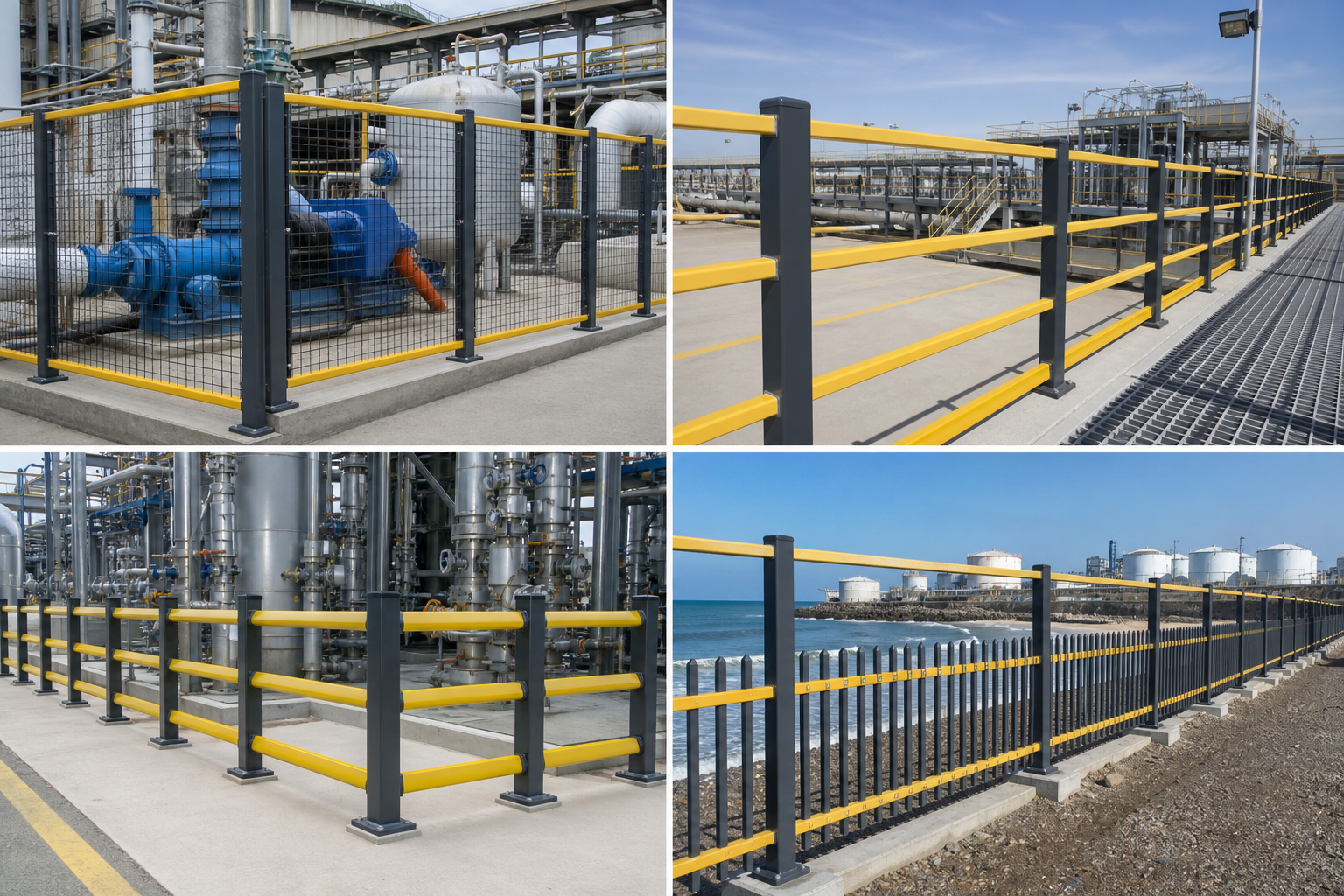
FRP fencing and handrails are barrier and support systems built from fibreglass-reinforced plastic profiles.
These profiles get assembled into fencing, guardrails, handrails, boundary barriers, walkway rails and protective enclosures. FRP itself is a resin matrix reinforced with glass fibre it gives the finished pipe real strength without dragging along the weight or corrosion headaches that come with a lot of metal alternatives.
Fencing gets used to separate areas, protect equipment, restrict access or simply mark a visible boundary. Handrails go in beside walkways, stairs, platforms, ramps and access routes, giving people something to hold onto while they move through a site.
Where FRP earns its keep is anywhere steel would otherwise be fighting chemicals, salt air, moisture or repeated washdowns. That said, the posts, rails, brackets, base plates, fasteners and support spacing still have to be engineered for the specific location and use the profile alone doesn’t do that work.
Why Use FRP Fencing and Handrails?
COMPLETE PRODUCT RANGE
TYPES OF PRODUCT
When you work with chemicals, you need tools you can count on. That’s why we make our scrapers, spatulas, and scoops from virgin polypropylene they’re built to handle tough jobs without letting you down.
FRP FENCING APPLICATIONS & FRP HANDRAIL APPLICATIONS
Equipment Fencing
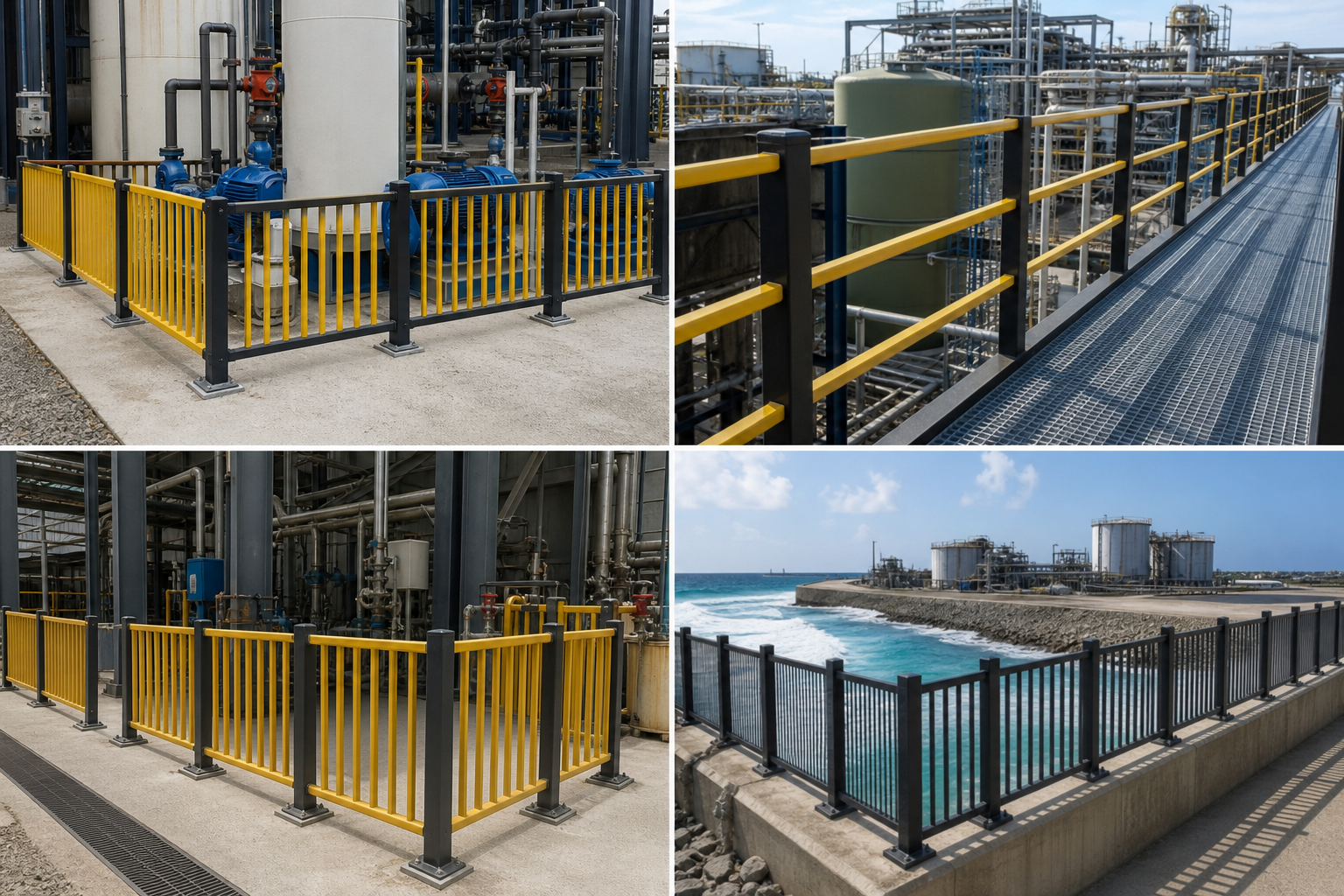
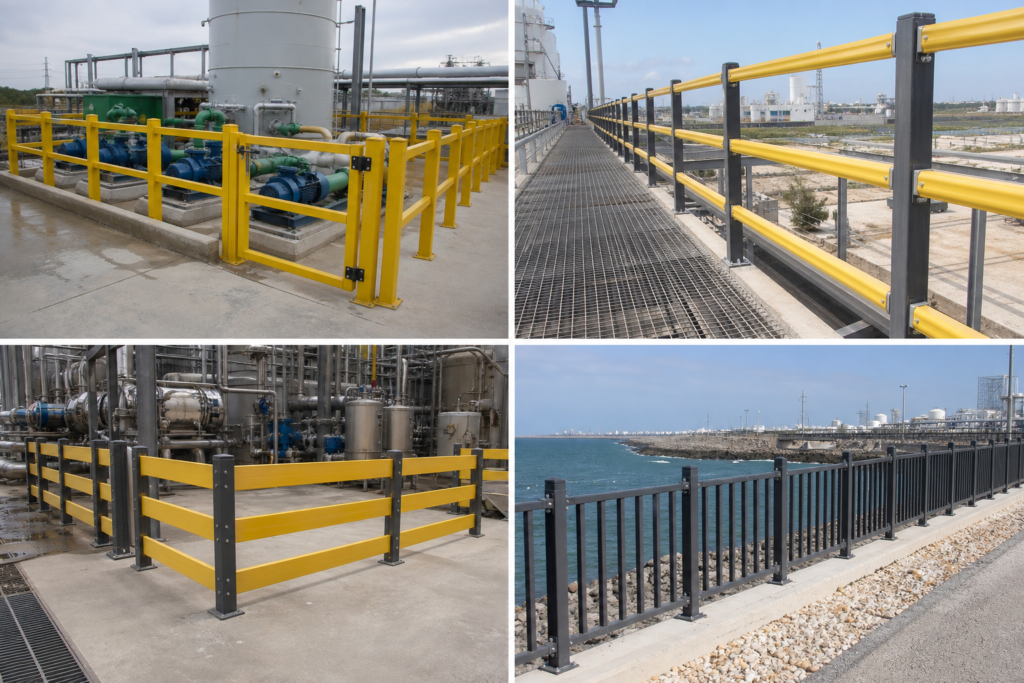
FRP fencing can be used around pumps, tanks, electrical equipment, chemical process areas, and other zones where access needs to be controlled.
Walkway Barriers
Fencing sections can separate a walkway from equipment, open edges, vehicles, or storage areas.
Chemical Area Barriers
FRP is useful in chemical environments where ordinary painted steel can require frequent repair. The chemical exposure still needs to be checked before the material is approved.
Coastal and Marine Fencing
Salt air and moisture can shorten the life of steel fencing. FRP does not rust, making it a practical material for selected coastal and marine applications.
Site and Perimeter Fencing
FRP profiles can be used in boundary and access-control structures when the frame and infill design are suitable for the site.
Industrial Walkways
FRP handrails can be installed beside elevated or ground-level walkways in plants and utility areas.
COMPLETE PRODUCT RANGE
WHERE FRP FENCING AND HANDRAILS ARE USED?
FRP fencing and handrails are used wherever people, equipment, and process areas need a boundary or support rail that can handle the surrounding conditions.
- Chemical Plants
- Water Treatment Plants
- Effluent Treatment Plants
- Coastal Facilities
- Marine and Port Areas
- Oil and Gas Sites
- Power Plants
- Electrical Substations
- Factory Walkways
- Industrial Platforms
- Staircases and Ramps
- Cooling Tower Areas
- Rooftop Access Areas
- Process Plant Perimeters
- Equipment Protection Zones
- Warehouse Barriers
- Utility Areas
- Commercial and Institutional Sites
- Public Walkways
- Chemical Storage Areas
The right profile and fixing arrangement depend on the site, the height of the barrier, expected contact, wind, access requirements, and local safety standards.
APPLICATIONS BY INDUSTRY
FRP OR STEEL HANDRAILS?
Steel remains useful for many structures, but it needs a coating and maintenance plan when exposed to water, chemicals, or salt air. FRP is often selected when corrosion resistance and low weight matter more than the familiarity of steel fabrication.
The comparison is a starting point, not a design approval. The final choice should account for loading, impact, height, support spacing, wind, chemical exposure, and local requirements.
CUSTOM FABRICATION SERVICES
CUSTOM FRP FENCING AND HANDRAILS
Industrial sites rarely have perfectly straight runs. There may be tanks, pipes, ladders, drains, platforms, access gates, and changes in level along the route.
Plastic Fabricators can discuss project requirements involving:
- Custom running lengths
- Corners and turns
- Stair and ramp rails
- Platform barriers
- Equipment fencing
- Gates and access openings
- Colour selection
- Replacement of corroded steel rails
- Profile cutting
- Project quantities
- Site delivery across India
Share a drawing, photograph, sample, or basic measurements for a more useful discussion.
TECHNICAL SUPPORT
We Provide Full Technical Support
Our technical team is available to help you select the right profiles, verify load capacities, and confirm chemical compatibility for your specific application.
- ✓Load capacity calculations
- ✓Material selection guidance
- ✓Installation recommendations
- ✓Chemical compatibility data
- ✓Sample profiles for testing (charge applies)
- ✓Project quotations
- ✓Technical questions
- ✓Custom profile development
- ✓Bulk order pricing
ORDERING INFORMATION
How to Order
Call or message us directly with your requirements. No complex procurement process just tell us what you need and we will get back to you with pricing and availability.
- →Fencing, handrail, railing, or barrier
- →Total running length
- →Required height
- →Post spacing
- →Corners, gates, and openings
- →Required colour
- →Fastener preference
- →Site location
- →Drawings or photographs
- →Required delivery schedule
Call or message for pricing, stock availability, technical data sheets, sample requests, and custom quotes.
- 📞+91 98200 80431
- 📞+91 85919 42677
- ✉️mitesh@plasticfabricators.in
- 📍A-31, Second Floor, Ghanshyam Industrial Estate, Veera Desai Road, Andheri (West), Mumbai – 400053
All information accurate as of publication. Specifications subject to change with process improvements. Call to confirm current specifications for your application.
Ready to Order or Quote?
Call or message us directly. We provide load calculations, material selection guidance, chemical compatibility data, and sample profiles.