
FRP CABLE TRAYS
& LADDER TYPE CHANNELS
Manufactured by Plastic Fabricators
Cable trays don't get much attention until the wrong one is installed. Steel trays in a chemical plant start rusting within a year. Aluminium ones pit and corrode near coastal air. Once cables are routed through them, nobody wants to redo that work every few years.
FRP (Fibre Reinforced Plastic) cable trays solve this by removing corrosion from the equation entirely. We manufacture them in ladder type and channel type profiles, in widths from 50mm to 900mm, for plants, substations, marine sites, and data centres across India.
TECHNICAL DATA
WHAT IS AN FRP CABLE TRAY?
An FRP cable tray is a cable support system made from fibreglass reinforced with polyester or vinyl ester resin, instead of steel or aluminium. It performs the same job as a metal tray carrying and organising cables between two points — but it doesn’t rust, doesn’t conduct electricity, and doesn’t need repainting.
Think of it as a raised, open pathway for cables. Instead of cables lying loose or getting bundled against a wall, they sit inside the tray, spaced out, supported, and protected from the surrounding environment. In a normal office building this hardly matters. In a fertiliser plant, a sewage treatment facility, or an offshore rig, it’s the difference between cables that last twenty years and cables that get damaged by a corroded tray within five.
The resin body means the tray itself is chemically inert acids, salts, and moisture that would eat through galvanised steel simply don’t affect FRP the same way. And because there’s no metal in the structure, there’s no risk of stray current, grounding faults, or sparking, which is why FRP trays are the default choice in substations and hazardous chemical zones.
TECHNICAL DATA
WHERE THESE TRAYS ACTUALLY GET USED
We get asked this a lot, so here’s the honest breakdown of where FRP earns its keep over steel:
Chemical Plants & Refineries Acidic and caustic vapours in these environments eat through galvanised coatings fast. We’ve seen steel trays go from freshly painted to visibly corroded in under two years in some plants. FRP just sits there, unaffected, for decades.
Marine and Offshore Installations Docks, coastal facilities, and offshore rigs deal with constant salt spray and humidity. Standard steel trays are essentially on borrowed time in these conditions. FRP doesn’t pit, doesn’t rust, and needs no maintenance coating.
Power Plants and Water Utilities Wastewater treatment plants, sewage facilities, and power generation sites need trays that can handle both chemical exposure and water ingress without degrading. FRP handles both without a second thought.
Metros, Tunnels, and Data Centres Anywhere non-conductive properties matter — near live electrical equipment, in confined underground spaces, or around sensitive server infrastructure — FRP is specified because there’s zero risk of the tray itself becoming a conductive path.
Electrical Substations Same logic as ladders in this category: a non-conductive cable tray next to live switchgear is simply safer than a metal one.
TECHNICAL DATA
Material Properties
All FRP cable trays are pultruded using E-glass fibre rovings and continuous strand mats, bound with isophthalic polyester or vinyl ester resin. UV stabilisers are standard; fire retardant additives are available where the application calls for it.
Composition
- E-glass fibre rovings and continuous strand mats
- Isophthalic polyester or vinyl ester resin
- UV stabilisers
- Fire retardant additives (optional)
Physical Properties
| Property | Value |
|---|---|
| Tensile Strength (longitudinal) | 207 MPa |
| Flexural Strength | 241 MPa |
| Compressive Strength | 241 MPa |
| Dielectric Strength | 7.5 kV/mm |
| Water Absorption | < 0.5% |
| Density | 1.8 g/cm³ |
| Coefficient of Thermal Expansion | 8 × 10⁻⁶ /°C |
| Service Temperature | –40°C to 120°C |
Why FRP Over Steel or Aluminium Trays?
COMPARISON
FRP VS TRADITIONAL CABLE TRAY MATERIALS
FRP replaces steel, aluminum, and wood where corrosion, electrical conductivity, or maintenance costs are problems. This table compares all critical factors across all four materials.
| Factor | FRP (Our Product) | Galvanized Steel | Aluminium | Wood |
|---|---|---|---|---|
| Corrosion Resistance | Excellent | Poor (rusts) | Fair (pits) | Poor (rots) |
| Electrical Conductivity | None | Conductive | Conductive | None |
| Weight (relative) | 1 | 4 | 1.5 | 0.8 |
| Maintenance Required | None | Paint every 2–3 yrs | None | Seal/replace |
| UV Resistance | Good (stabilized) | Good | Good | Poor |
| Chemical Resistance | Excellent | Poor | Fair | Poor |
| Lifespan | 20+ years | 5–10 years | 10–15 years | 3–7 years |
| Installation Labor | Low | High | Medium | Medium |
COMPLETE PRODUCT RANGE
Product Catalogue
All profiles manufactured in Safety Yellow (RAL 1003) as standard. Custom colors available on request for volume orders. Standard length: 6 meters. Custom cutting to exact lengths available.
COMPLETE PRODUCT RANGE
We manufacture two main profile families for cable tray applications: channel type (solid bottom) trays for lighter cable loads and enclosed protection, and ladder type trays for heavier cable bundles that need ventilation and easier access. All profiles are pultruded in Safety Yellow (RAL 1003) as standard; other colours are available on request for volume orders. Standard length is 6 metres, with custom cutting available.
FRP CABLE TRAY (SOLID BOTTOM)
DESCRIPTION
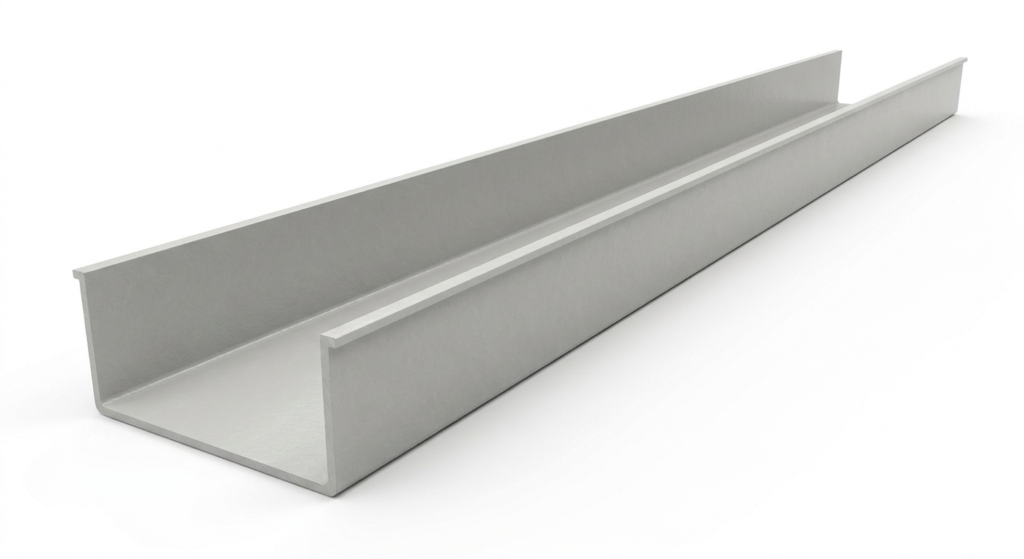
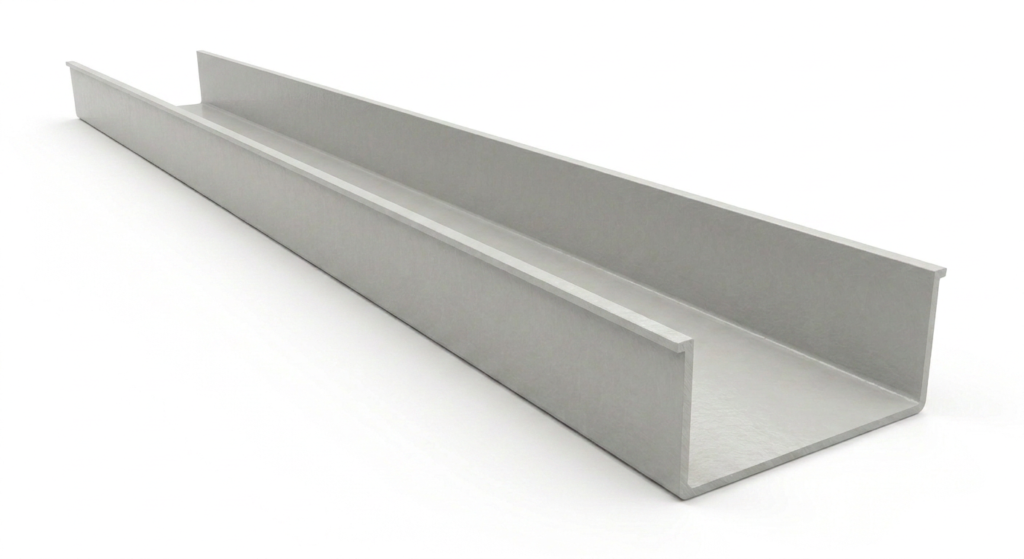
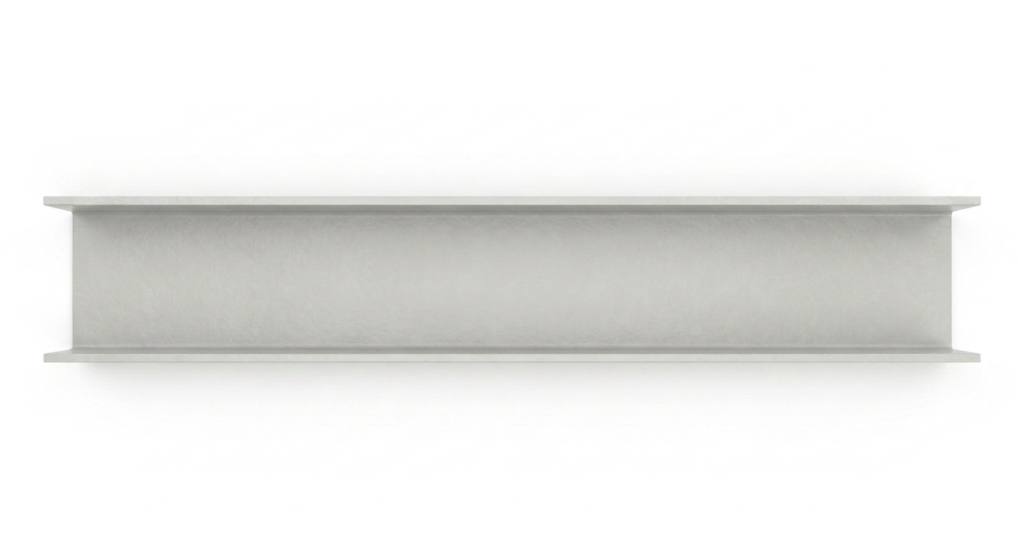
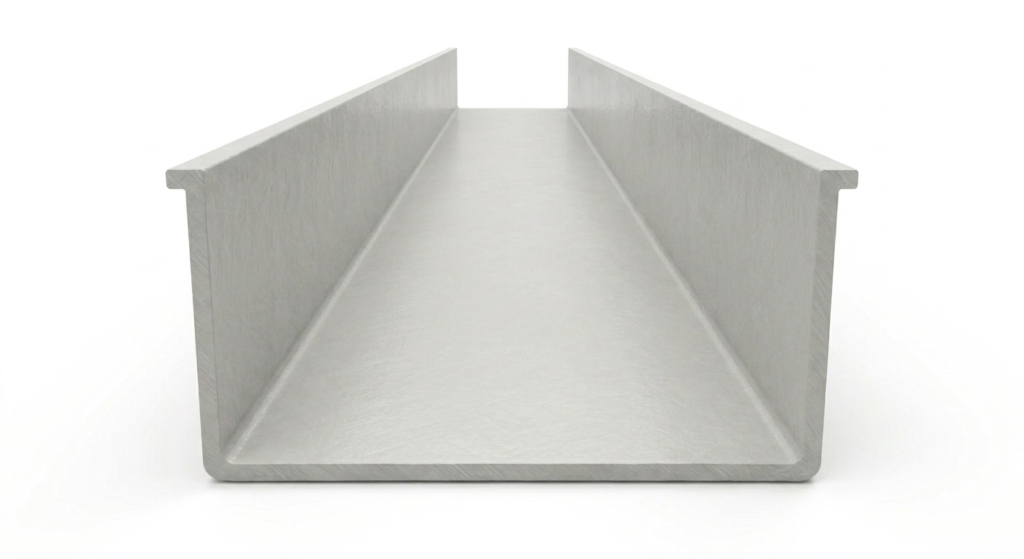
This is the enclosed, solid-bottom version of the tray — width refers to the internal cable-carrying dimension, and height is the side wall. Up to 450mm width, the profile runs at 50mm height with 3mm wall thickness, which is enough for most cable loads. Once you move to 500mm and 600mm widths, the side walls step up to 100mm height and 4mm wall thickness. Wider trays carry more cable weight, so the extra wall height and thickness are there to stop the tray from bowing or twisting under load.
Why the Thickness Changes with Width
This isn’t arbitrary it’s basic structural sense. A wider tray spans a longer distance between supports and carries more cumulative cable weight across that span. Keeping the same 3mm wall on a 600mm tray would risk deflection under a full cable load. Stepping up to 100mm height and 4mm thickness on the 500mm and 600mm sizes keeps deflection within safe limits without over-engineering the smaller sizes.
FEATURES
- Solid bottom for full cable protection from dust, drips, and debris
- Smooth internal surface no burrs or sharp edges that can damage cable jackets
- Consistent wall thickness across the run
- Will not warp or twist after cutting
APPLICATIONS
Instrumentation cable runs | Control cable protection | Indoor and outdoor cable routing | Areas with dust or drip exposure
LADDER TYPE FRP CABLE TRAY
DESCRIPTION
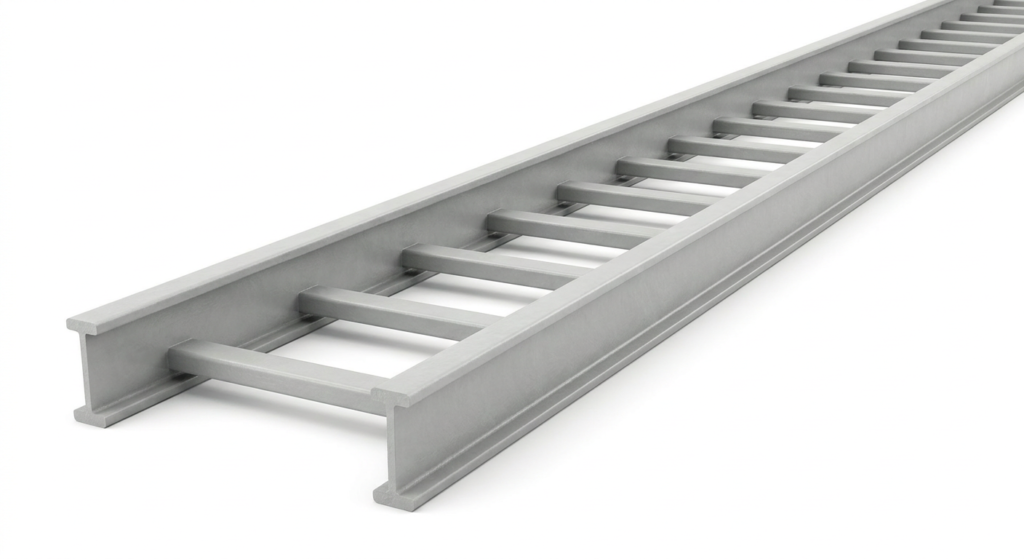
Ladder type trays don’t have a solid bottom cables rest across the rungs, which are supported by two side channels running the length of the tray. This is the profile you want for heavier power cable runs, since the open structure lets heat dissipate instead of building up inside an enclosed tray. It’s also faster to inspect and add cables to later, since there’s no cover to remove.
Construction
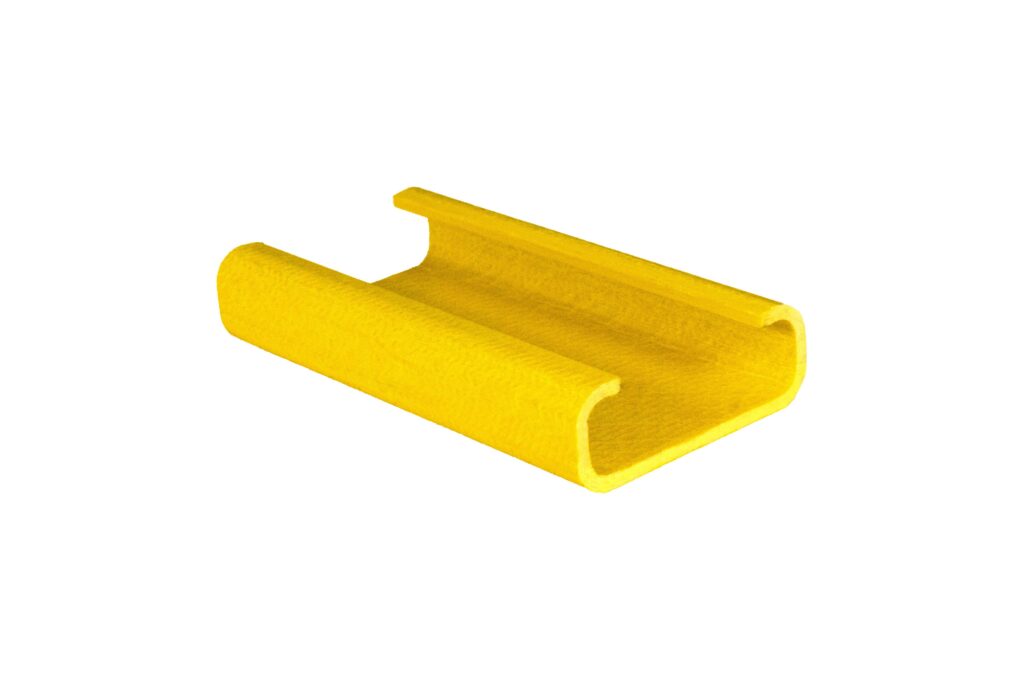
Every ladder tray in this range uses a 100mm height, 3mm wall thickness main profile, with side channels sized at 100mm × 30mm × 3mm. The side channels are what carries the structural load they’re the “rails” of the ladder — while the width (300mm to 900mm) simply determines how many cables can sit across the rungs.
Why Ladder Instead of Solid Bottom
For high-current power cables, heat matters more than dust protection. A solid bottom tray traps heat around the cables; a ladder tray lets it escape. That’s why power cable runs in plants and substations are almost always routed on ladder type trays, while instrumentation and control cables — which generate very little heat and benefit from extra physical protection — go into the solid channel type.
Features
- Open rung design for natural heat dissipation
- Side channels rated for the full width range up to 900mm
- Easy mid-life cable additions without disturbing existing runs
- Same corrosion and non-conductive properties as the channel type.
APPLICATIONS:
Power cable distribution | High-current runs in plants and substations | Areas needing easy future cable additions | Long outdoor runs where heat buildup is a concern.
ORDERING REFERENCE
Standard Specifications
Color: Safety Yellow (RAL 1003) as standard. Custom colors available on request for volume orders. Standard length: 6 meters, with custom cutting to exact lengths available.
| Product | Size | Standard Length | Standard Color | Custom Fabrication |
|---|---|---|---|---|
| FRP Channel Tray | 50×50×3mm | 6 meters | Safety Yellow RAL 1003 | ✓ Available |
| FRP Channel Tray | 100×50×3mm | 6 meters | Safety Yellow RAL 1003 | ✓ Available |
| FRP Channel Tray | 150×50×3mm | 6 meters | Safety Yellow RAL 1003 | ✓ Available |
| FRP Channel Tray | 200×50×3mm | 6 meters | Safety Yellow RAL 1003 | ✓ Available |
| FRP Channel Tray | 300×50×3mm | 6 meters | Safety Yellow RAL 1003 | ✓ Available |
| FRP Channel Tray | 450×50×3mm | 6 meters | Safety Yellow RAL 1003 | ✓ Available |
| FRP Channel Tray (reinforced) | 500×100×4mm | 6 meters | Safety Yellow RAL 1003 | ✓ Available |
| FRP Channel Tray (reinforced) | 600×100×4mm | 6 meters | Safety Yellow RAL 1003 | ✓ Available |
| FRP Ladder Tray | 300×100×3mm | 6 meters | Safety Yellow RAL 1003 | ✓ Available |
| FRP Ladder Tray | 600×100×3mm | 6 meters | Safety Yellow RAL 1003 | ✓ Available |
| FRP Ladder Tray | 700×100×3mm | 6 meters | Safety Yellow RAL 1003 | ✓ Available |
| FRP Ladder Tray | 900×100×3mm | 6 meters | Safety Yellow RAL 1003 | ✓ Available |
| Ladder Side Channel | 100×30×3mm | 6 meters | Safety Yellow RAL 1003 | ✓ Available |
APPLICATIONS BY INDUSTRY
Where Our FRP Profiles Are Used
Our FRP ladder sections and structural profiles are trusted across six major industries where corrosion, electrical conductivity, and maintenance costs are primary concerns.
- –Non-conductive cable routing for substations
- –Switchgear area cable management
- –Transformer yard installations
- –Control room cable runs
- –Acid and caustic resistant cable protection
- –Process area cable routing
- –Equipment interconnect trays
- –Treatment plant cable management
- –Pump station wiring protection
- –Areas with constant moisture exposure
- –Non-sparking cable trays for hazardous zones
- –Offshore platform cable runs
- –Refinery instrumentation cabling
- –Dock and port electrical infrastructure
- –Shipboard cable runs
- –Saltwater-exposed installations
- –Underground cable routing
- –Non-conductive tray systems near sensitive equipment
- –Long-run power and data cable separation
SITE GUIDE
Installation Guidelines
FRP profiles work with standard workshop tools. No specialist equipment required on site. Follow these guidelines for clean cuts, accurate drilling, and a square, tight assembly.
- →Use carbide-tipped blades
- →Woodworking circular saws work well
- →Abrasive cut-off wheels also suitable
- →Support both sides of cut to prevent splintering
- →Standard HSS or carbide drill bits
- →Back up the material to prevent blowout
- →No pilot hole required for small diameters
- →Use slow to medium drill speeds
- →Stainless steel (304 or 316) recommended
- →Galvanized steel acceptable
- →Use washers under bolt heads and nuts
- →Do not over-torque (can crush material)
- →Pre-fit components before final tightening
- →Allow for thermal expansion in long runs
- →Use shims if needed for alignment
- →Check squareness as you assemble
CUSTOM FABRICATION SERVICES
More Than Just Standard Profiles
We supply cable trays in standard 6-meter lengths, or as custom-fabricated sections ready for installation.
- ✓Cutting to exact lengths
- ✓Drilling hole patterns
- ✓Notching and coping for bends and tee-offs
- ✓Assembly of complete tray sections with covers
- ✓Custom color matching
- ✓Special resin formulations for aggressive chemical environments
- ✓Components arrive ready to install — no on-site cutting
- ✓Precise hole patterns reduce assembly time
- ✓Custom colors for project-specific requirements
- ✓Special resins for aggressive chemical exposure
- ✓Complete tray sections fully assembled to spec
TECHNICAL SUPPORT
We Provide Full Technical Support
Our technical team is available to help you select the right profiles, verify load capacities, and confirm chemical compatibility for your specific application.
- ✓Load capacity calculations
- ✓Material selection guidance
- ✓Installation recommendations
- ✓Chemical compatibility data
- ✓Sample profiles for testing (charge applies)
- ✓Project quotations
- ✓Technical questions
- ✓Custom profile development
- ✓Bulk order pricing
ORDERING INFORMATION
How to Order
Call or message us directly with your requirements. No complex procurement process — just tell us what you need and we will get back to you with pricing and availability.
- →Product name or part code
- →Quantity (in meters or pieces)
- →Lengths required
- →Color (if other than yellow)
- →Any custom fabrication needs
Call or message for pricing, stock availability, technical data sheets, sample requests, and custom quotes.
- 📞+91 77388 20726
- ✉️mitesh@plasticfabricators.in
- 📍A-31, Second Floor, Ghanshyam Industrial Estate, Veera Desai Road, Andheri (West), Mumbai – 400053
All information accurate as of publication. Specifications subject to change with process improvements. Call to confirm current specifications for your application.
Ready to Order or Quote?
Call or message us directly. We provide load calculations, material selection guidance, chemical compatibility data, and sample profiles.