
PP STRAINERS, LATERALS, EJECTORS & BALLS
Manufactured by Plastic Fabricators
Every industrial filtration system is dependent on its internal components. Small polypropylene parts are essential for preserving flow, enhancing filtration efficiency, and preventing corrosion in equipment, whether it's an electroplating tank, a chemical dosing system, or a pressure sand filter in a water treatment facility.
For businesses that need dependable performance in harsh and corrosive operating environments, Plastic Fabricators produces a full line of **Polypropylene (PP) Strainers, PP Laterals, PP Ejectors, and PP Balls**. These products, which are made from high-quality polypropylene materials, have a long service life, outstanding chemical resistance, and dependable performance in filtration and process applications. Our PP strainers have a precision slit design that facilitates effective use in carbon filters, pressure sand filters, and softener systems filtration and backwashing, while PP balls help reduce evaporation and heat loss in electroplating tanks.
TECHNICAL DATA
WHAT ARE PP STRAINERS, LATERALS, EJECTORS & PP BALLS?
Systems for chemical processing and industrial filtration depend on more than just pipelines, tanks, and pumps. Specialized polypropylene parts found inside these systems regulate fluid distribution, increase filtration effectiveness, lower maintenance costs, and guaranty smooth operation. While each part plays a distinct role, taken as a whole, they support uniform process performance in chemical industries, water treatment facilities, electroplating units, and process equipment.
When polypropylene is exposed to moisture, chemicals, or process water, it does not rust, scale, or corrode like traditional metallic components do. Because of this, PP components are a sensible option for businesses trying to reduce maintenance while increasing equipment longevity. Additionally, polypropylene has good mechanical strength, which makes it appropriate for continuous industrial use in a variety of handling and filtration systems.
PP Strainers
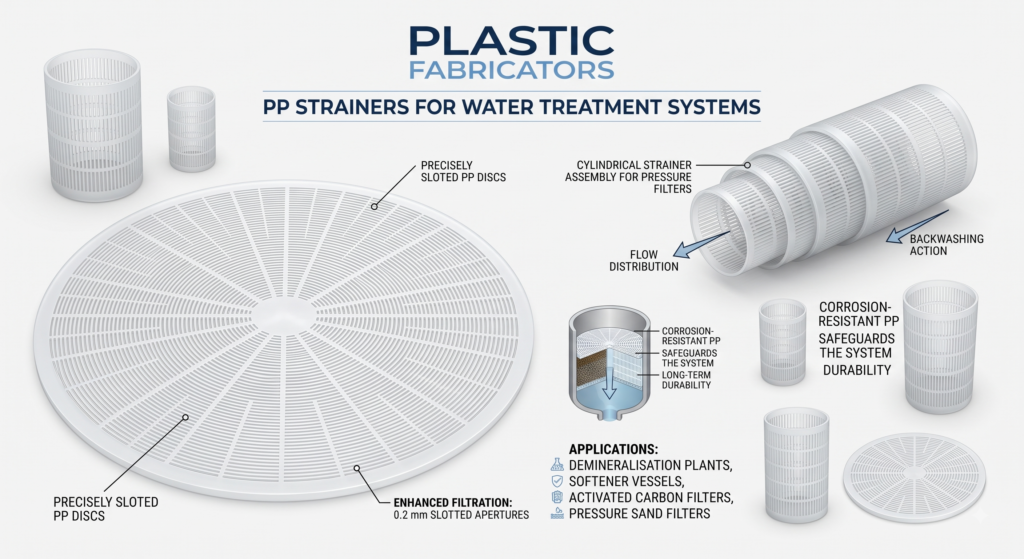
PP strainers are filtration elements found in demineralization systems, softeners, activated carbon filters, and pressure sand filters. Collecting filtered water while keeping filter media out of the outlet pipeline is their main job. Precision slotted apertures enhance filtration and backwash performance by allowing water to flow thru effectively while holding onto the filtration media. The strainers made by Plastic Fabricators have a 0.2 mm slit size and are suitable for a number of filtration uses.
PP Laterals
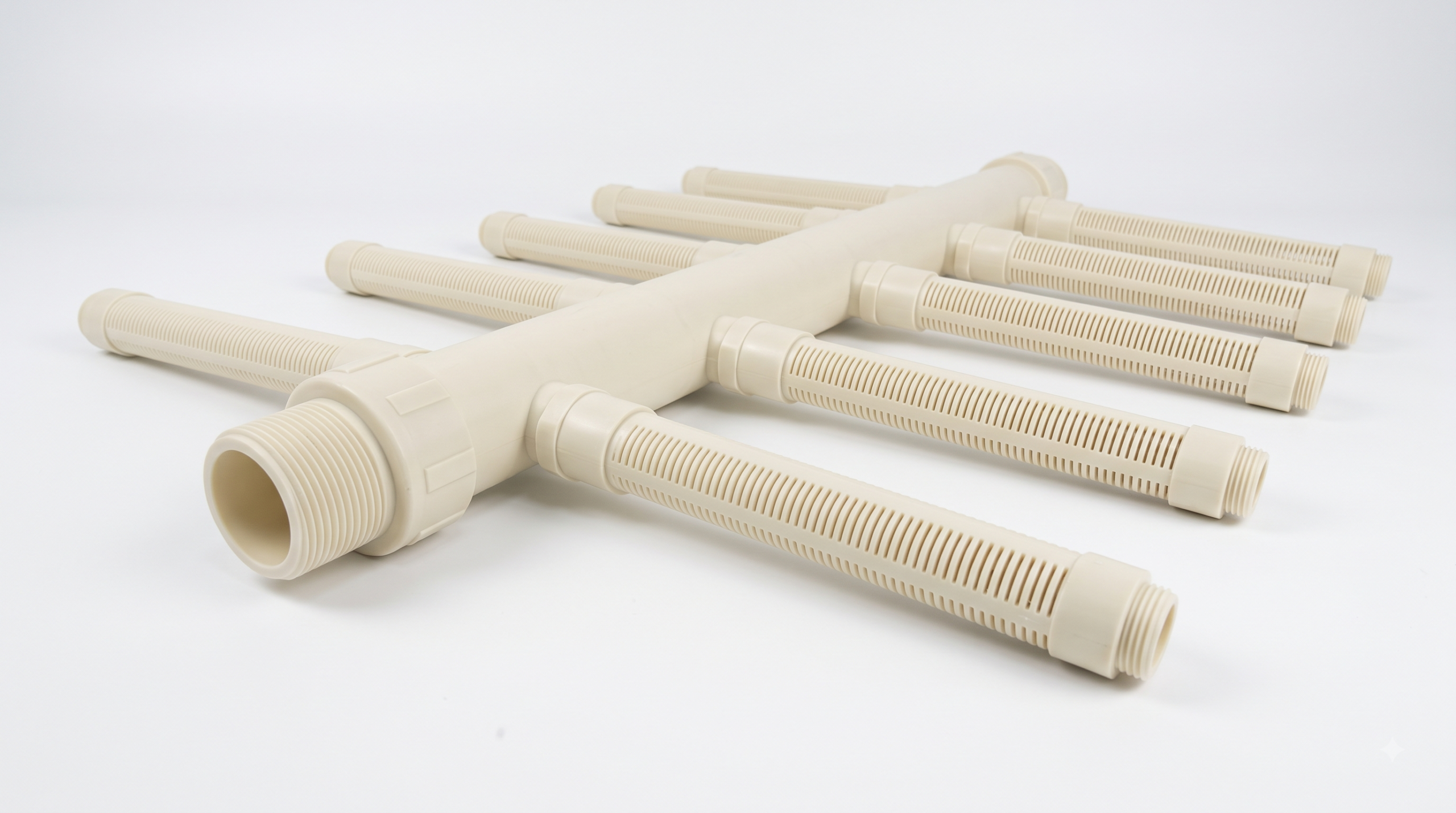
The distribution network inside filtration vessels is made up of PP laterals. They guarantee uniform water collection and distribution throughout the filter bed by being connected to a central header. Uniform filtration, effective backwashing, and improved filter media utilization are all facilitated by proper lateral design. Water treatment facilities, activated carbon filters, and pressure sand filters frequently employ header-lateral systems.
PP Ejectors
Chemicals or process fluids can be transferred or mixed without the need for moving mechanical parts thanks to PP ejectors, which use the Venturi principle to create suction using flowing liquid. PP ejectors are frequently utilized in chemical dosing systems, acid transfer applications, and industrial process plants where metallic ejectors might have a shorter service life because polypropylene is resistant to many corrosive chemicals.
PP Balls
PP balls are hollow floating balls made of virgin polypropylene that are frequently utilized in chemical process vessels, pickling tanks, and electroplating tanks. They minimize heat loss, suppress fumes, lower evaporation, and increase energy efficiency by floating on the liquid’s surface. They offer a straightforward but efficient way to safeguard process liquids while reducing operating expenses because they are lightweight and chemically resistant.
WHY INDUSTRIES CHOOSE POLYPROPYLENE COMPONENTS
COMPLETE PRODUCT RANGE
TYPES OF PRODUCT
Every filtration and process system has different operating requirements, which is why no single polypropylene component can perform every function. PP strainers, laterals, ejectors, and floating balls are designed for different stages of filtration, distribution, fluid handling, and process efficiency.
At Plastic Fabricators, each product is manufactured using quality polypropylene to provide corrosion resistance, good mechanical strength, and dependable performance in demanding industrial environments. Whether you’re designing a new filtration plant or replacing worn-out internal components, our products are built to integrate with a wide range of industrial systems.
PP STRAINERS
Description
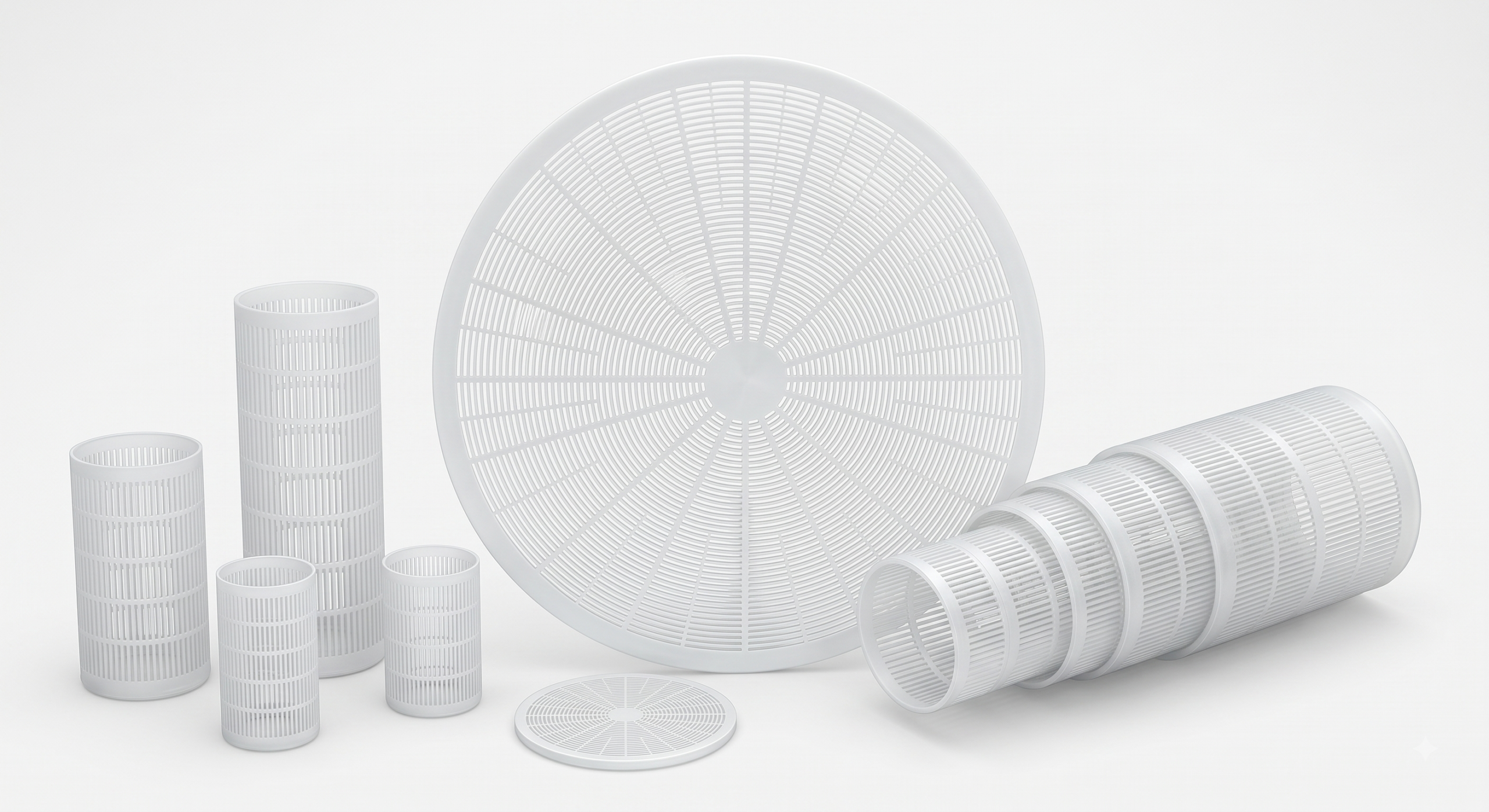
In any pressure filter, the strainer safeguards the entire system while the filter media cleans. A poorly constructed strainer can increase maintenance costs, decrease filtration efficiency, and let media escape. Because of this, PP strainers are a crucial part of demineralisation plants, softener vessels, activated carbon filters, and pressure sand filters.
Polypropylene strainers with precisely slotted apertures that let filtered water pass while holding onto the filter media are made by Plastic Fabricators. Consistent flow distribution, effective backwashing, and enhanced filtration performance are all made possible by the 0.2 mm slit design. These strainers, which are made of corrosion-resistant polypropylene, are appropriate for water treatment applications where long-term durability is crucial, such as drinking water systems, with plain white background
Key Features
- Manufactured from corrosion-resistant polypropylene
- Precision 0.2 mm slit opening
- Good mechanical strength
- Lightweight and easy to install
- Suitable for drinking water applications
- Supports efficient filtration and backwash cycles
- Available in multiple configurations to suit different filtration systems
Common Applications
- Pressure Sand Filters
- Activated Carbon Filters
- Water Softeners
- Demineralisation Plants
- Industrial Water Treatment Plants
- RO Pretreatment Systems
- Effluent Treatment Plants
- Process Water Filtration
PP EJECTORS
Description
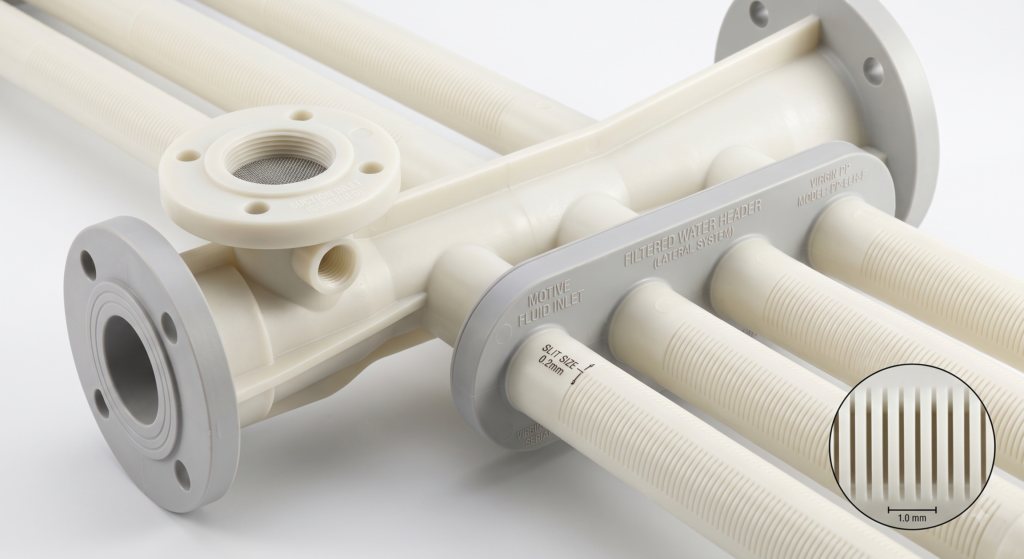
Chemicals must be precisely mixed, transferred, or dosed in many industrial processes. The Venturi principle, in which flowing liquid creates suction to draw another fluid into the system, is how PP ejectors accomplish this. Ejectors provide a straightforward, dependable, and low-maintenance solution because they don’t have any moving mechanical parts.
PP ejectors, which are made of polypropylene, offer exceptional resistance to a wide range of corrosive chemicals, which makes them appropriate for applications involving chemical dosing, acid transfer, scrubber systems, and water treatment where corrosion may affect metallic components.
In addition to requiring less maintenance, their simple design ensures dependable performance in continuous-duty industrial settings.
Key Features
- Venturi-based operation
- No moving mechanical parts
- Corrosion-resistant polypropylene construction
- Lightweight and compact
- Low maintenance
- Smooth internal flow
- Suitable for chemical handling applications
Common Applications
- Chemical Dosing Systems
- Acid Transfer
- Water Treatment Plants
- Scrubber Systems
- Fertiliser Injection
- Industrial Process Plants
- Chemical Processing Units
- Effluent Treatment Systems
PP LATERALS
Description
A filtration system’s water distribution determines how effective it is. Water must be collected and distributed uniformly throughout the filter bed by PP laterals. Channeling, decreased media usage, and decreased filtration efficiency can all result from uneven flow.
Our polypropylene laterals are made to function as a header-lateral assembly, guaranteeing balanced flow throughout backwash and service cycles. They are made of polypropylene, which provides outstanding resistance to scale formation and corrosion while preserving structural integrity over time.
PP laterals help maintain consistent filtration performance and lower maintenance requirements whether they are installed in softener vessels, activated carbon filters, or pressure sand filters.
Key Features
- Uniform water distribution
- Corrosion-resistant construction
- Lightweight design
- Easy installation and replacement
- Compatible with header-lateral assemblies
- Long operational life
- Suitable for continuous industrial service
Common Applications
- Pressure Sand Filters
- Activated Carbon Filters
- Water Softening Plants
- DM Plants
- Industrial Filtration Systems
- Municipal Water Treatment
- Process Water Filtration
- Media Filter Vessels
INDUSTRIES WE SERVE (APPLICATIONS)
- Our PP Strainers, Laterals, Ejectors, and Balls are widely used across:
- Water Treatment Plants
- Effluent Treatment Plants (ETP)
- Sewage Treatment Plants (STP)
- Demineralisation Plants
- Reverse Osmosis Systems
- Chemical Processing Industries
- Electroplating Plants
- Pharmaceutical Industries
- Textile Processing Units
- Food & Beverage Industries
- Fertiliser Plants
- Surface Treatment Industries
- Cooling Water Systems
- Industrial Utility Plants
ORDERING REFERENCE
SPECIFICATION APPROACH
Every filtration system is different, so the internal components must match the vessel design, media type, flow requirement, and operating conditions. Plastic Fabricators manufacture PP strainers, laterals, ejectors, and PP balls in standard as well as custom configurations to suit different industrial applications. The exact dimensions and configurations are selected based on the filtration vessel or process equipment.
| Product | Material | Typical Application | Available Options |
|---|---|---|---|
| PP Strainers | Virgin Polypropylene | Pressure Sand Filters, Carbon Filters, Softeners | Various lengths, end connections & slit configurations |
| PP Laterals | Polypropylene | Header Lateral Systems, Filter Vessels | Multiple diameters & mounting options |
| PP Ejectors | Polypropylene | Chemical Dosing & Fluid Transfer | Standard and customised designs |
| PP Balls | Virgin Polypropylene | Electroplating & Chemical Tanks | Multiple diameters based on tank requirements |
Custom sizes and configurations are available to match your equipment and operating requirements.
APPLICATIONS BY INDUSTRY
WHY POLYPROPYLENE PERFORMS BETTER IN CORROSIVE ENVIRONMENTS ?
Moisture, chemicals, acids, alkalis, and process water are all commonplace in many industrial facilities. When exposed to these circumstances, metallic components may progressively corrode, impairing performance and raising maintenance needs.
Polypropylene exhibits distinct behavior. The material itself offers corrosion resistance rather than depending on protective coatings. Because of this, PP components can continue to function in applications like chemical processing, water treatment, electroplating, and effluent treatment without the constant maintenance that metal parts typically require. Polypropylene doesn’t need to be repainted or treated for corrosion because it doesn’t rust. To keep components functioning effectively, routine cleaning and inspection are usually sufficient.
Water distribution must be uniform in filtration systems. Consistent flow across the filter bed is maintained by well-designed strainers and laterals, which enhances media utilisation and facilitates effective backwashing.
Selecting the appropriate internal parts involves more than just the initial purchase. Over the course of the filtration system’s lifetime, lower maintenance, a longer service life, and dependable operation all contribute to a lower total cost of ownership.
CUSTOM MANUFACTURING
Built Around Your System
Vessel dimensions and operating conditions vary among filtration plants. Many installations can be completed with standard components, but some projects call for unique sizes, connections, or configurations.
Plastic Fabricators produces polypropylene parts for OEM equipment, replacement projects, and new installations based on client specifications. With decades of expertise in injection molding and plastic fabrication, we can provide parts that work well with current filtration systems.
- ✓Custom lengths and diameters
- ✓Different thread and connection options
- ✓Header-lateral assemblies
- ✓Various slit configurations
- ✓Product modifications for OEM requirements
- ✓Batch manufacturing
- ✓Replacement components for existing filtration systems
- ✓Better compatibility with existing equipment
- ✓Reduced installation time
- ✓Easier replacement during maintenance
- ✓Consistent manufacturing quality
- ✓Single-source supply for multiple PP components
TECHNICAL SUPPORT
We Provide Full Technical Support
Our technical team is available to help you select the right profiles, verify load capacities, and confirm chemical compatibility for your specific application.
- ✓Load capacity calculations
- ✓Material selection guidance
- ✓Installation recommendations
- ✓Chemical compatibility data
- ✓Sample profiles for testing (charge applies)
- ✓Project quotations
- ✓Technical questions
- ✓Custom profile development
- ✓Bulk order pricing
ORDERING INFORMATION
How to Order
Getting the right polypropylene component starts with understanding your application. Share your operating requirements, and our team will recommend the most suitable product and configuration.
- →Product Required (PP Strainer / Lateral / Ejector / Ball)
- →Application
- →Quantity Required
- →Existing Equipment Details
- →Customisation Requirements (if any)
- →Delivery Location
Call or message for pricing, stock availability, technical data sheets, sample requests, and custom quotes.
- 📞+91 98200 80431
- 📞+91 85919 42677
- ✉️mitesh@plasticfabricators.in
- 📍A-31, Second Floor, Ghanshyam Industrial Estate, Veera Desai Road, Andheri (West), Mumbai – 400053
All information accurate as of publication. Specifications subject to change with process improvements. Call to confirm current specifications for your application.
Ready to Order or Quote?
Call or message us directly. We provide load calculations, material selection guidance, chemical compatibility data, and sample profiles.