
FRP LINING & COATING
Manufactured by Plastic Fabricators
Steel tanks, concrete pits, and industrial trenches rarely fail overnight. Chemical exposure, moisture, abrasion, and daily use wear the surface down gradually, until leaks, patch-up jobs, and shutdowns become a regular part of operations. Concrete trenches and pits run into a similar issue. Water, chemicals, vapour, and frequent cleaning gradually work against the surface until repairs are hard to put off any longer.
FRP lining and coating create a protective barrier between the surface and whatever it holds or transports. We apply these systems to MS tanks, concrete tanks, trenches, pits, sumps, ducts, and select industrial zones. The right system depends on what the surface actually deals with. Before recommending a resin and laminate build-up, we look at the substrate, the chemical involved, temperature, the current condition of the surface, and how it will be used.
TECHNICAL DATA
WHAT IS FRP LINING AND COATING?
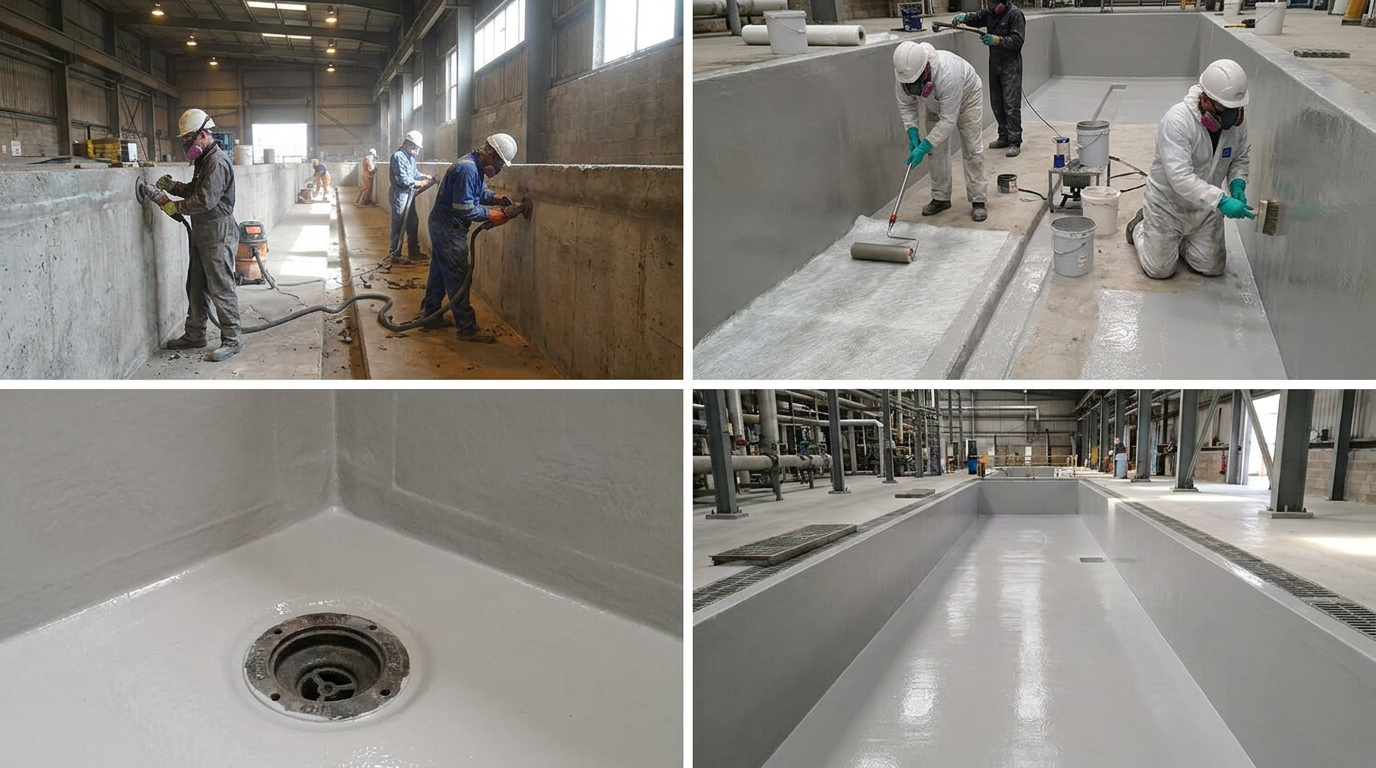
FRP lining is a protective laminate built from resin and fibreglass. It gets applied over surfaces like mild steel tanks, concrete trenches, pits, and various pieces of industrial equipment.
Fibreglass gives the system its strength. Resin forms the actual barrier that keeps water, chemicals, and process liquids away from the surface beneath it.
FRP coating, on the other hand, is usually just a resin-based layer, used where a full reinforced laminate isn’t really necessary. Lining tends to get picked for tougher conditions, while coating can work fine for lighter exposure.
Neither should be chosen based on the product name alone. A lining that holds up well in a water tank might not be right for hot chemicals, solvents, acids, or abrasive material. Chemical type, temperature, surface condition, and intended use all come into play.
Plastic Fabricators handles FRP lining and coating work out of Mumbai, covering industrial tanks, trenches, pits, process areas, and related surfaces.
Why Use FRP Lining and Coating?
COMPLETE PRODUCT RANGE
TYPES OF PRODUCT
When you work with chemicals, you need tools you can count on. That’s why we make our scrapers, spatulas, and scoops from virgin polypropylene they’re built to handle tough jobs without letting you down.
FRP LINING AND COATING SYSTEMS
MS Tank Lining
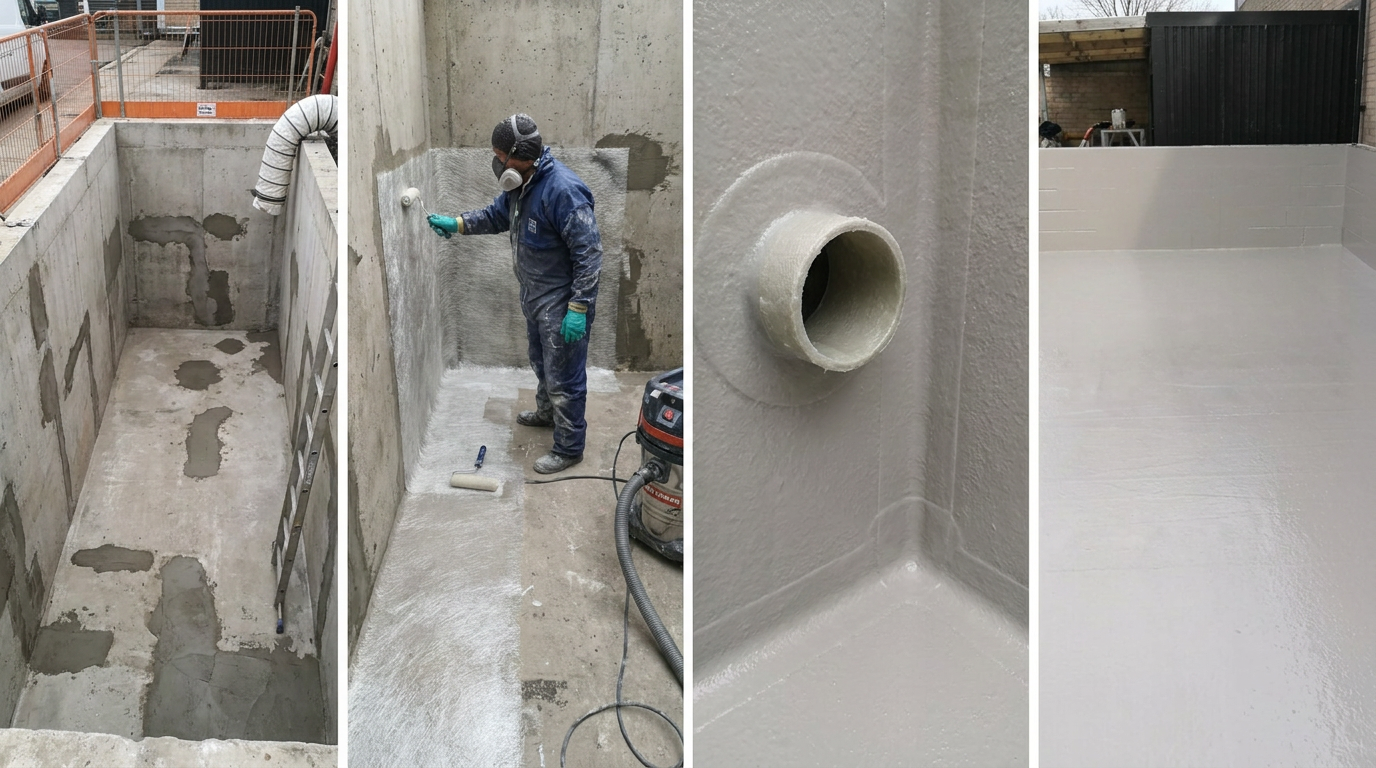
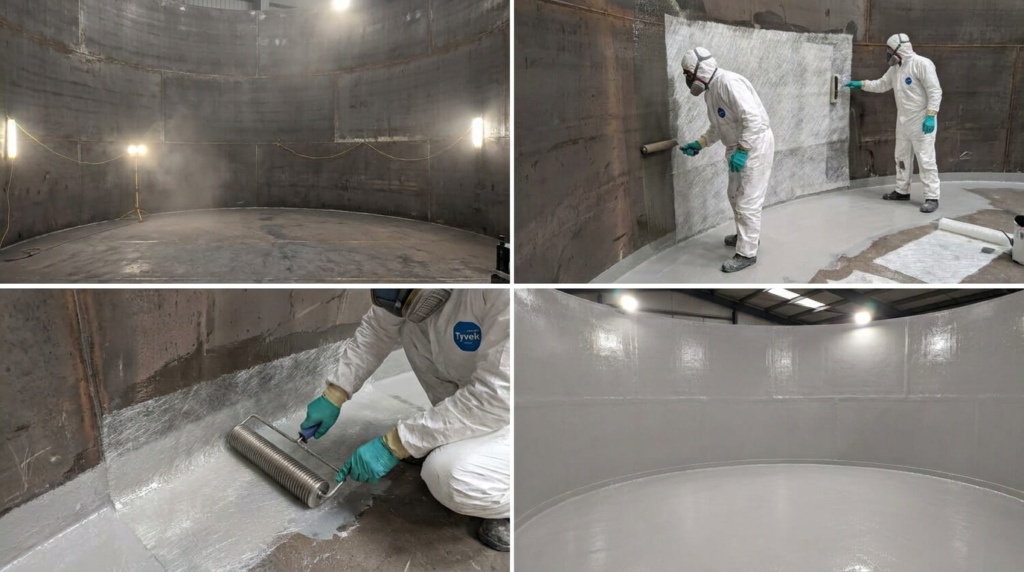
Water, chemicals, wastewater, process liquids any of these sitting inside a mild steel tank sets up the conditions for internal corrosion. FRP lining goes over the prepared steel surface and keeps that contact from happening directly.
Before we start, the tank gets checked for rust, old paint, deep corrosion, oil residue, and any other surface problems. If there’s structural damage, that has to be sorted out first lining over a compromised surface just hides the problem for a while.
Concrete Tank Lining
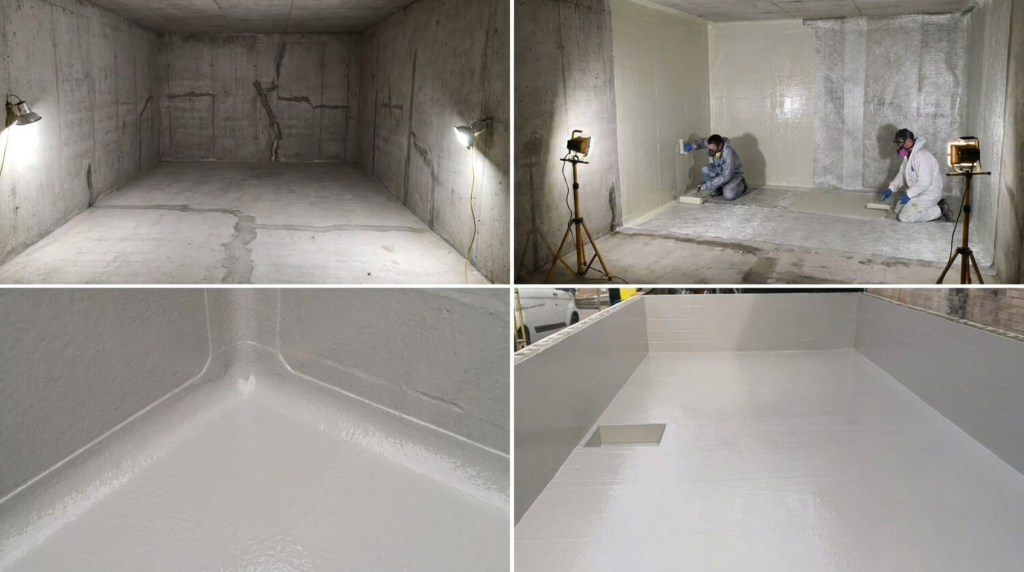
Concrete tanks soak up liquids and chemicals over time, more than most people expect from something that looks so solid. Lining the interior with FRP helps seal that surface and stop the absorption.
Trench Lining
Wastewater, chemicals, drainage, process liquids trenches carry all of it, often continuously. Lining them in FRP guards against seepage and the slow chemical damage that follows.
Pit and Sump Lining
Water, sludge, chemicals, cleaning waste pits and sumps end up collecting whatever runs off or gets washed down. With FRP, you get one continuous surface that’s simpler to wash out and check on.
Industrial Surface Coating
Not every surface needs a full lining. Floors, walls, ducts, equipment, and certain process areas can often get by with an FRP coating instead, as long as the site conditions support it.
COMPLETE PRODUCT RANGE
WHERE FRP LINING IS USED?
FRP lining and coating show up in areas where steel, concrete, or other surfaces deal with chemical contact, moisture, corrosion, or wear.
- Chemical plants
- Pharmaceutical facilities
- Water treatment plants
- Effluent treatment plants
- Sewage treatment plants
- Oil and gas facilities
- Fertiliser plants
- Textile processing units
- Food and beverage plants
- Paper and pulp units
- Electroplating plants
- Metal treatment facilities
- Cooling tower areas
- Chemical storage tanks
- Process tanks
- Drainage trenches
- Collection pits
- Chemical sumps
- Industrial floors
- Bund areas
- Scrubber and ducting systems
FRP tends to make the most sense when the existing structure is still usable but the surface itself needs better protection.
ORDERING REFERENCE
SPECIFICATION APPROACH
There’s no single lining thickness or resin that fits every application. The specification comes from the actual conditions on site.
| Requirement | Details |
|---|---|
| Substrate | Mild steel, concrete, FRP, or another surface |
| Chemical | Type, concentration, contact time, and cleaning agents |
| Temperature | Normal and peak operating temperature |
| Mechanical Exposure | Impact, movement, abrasion, and equipment contact |
| Moisture | Dry, damp, wet, or submerged conditions |
| Location | Tank, trench, pit, floor, duct, or equipment |
| Reinforcement | Fibreglass type and number of layers |
| Resin | Polyester, vinyl ester, epoxy, bisphenol, or another system |
| Finish | Smooth, textured, non-slip, or chemical-resistant |
| Inspection | Visual checks and other agreed tests |
Important: Resin compatibility should be confirmed before work begins, particularly where the surface will be in contact with strong chemicals, solvents, or hot process liquids.
APPLICATIONS BY INDUSTRY
WHEN IS A POLYPROPYLENE TOOL THE BETTER CHOICE?
Metal tools are strong, but they are not suitable for every job. In chemical and pharmaceutical environments, the material of the tool can affect safety, cleaning, corrosion, and product handling.
- A PP scraper or scoop may be the better option when:
- The tool will contact acids or alkalis
- The work area is wet or humid
- Rust is a concern
- Metal contact should be reduced
- The surface being scraped may be damaged by metal
- The tool will be used around powders or chemicals
- A lighter tool is preferred
- The tool needs regular washing
- The work is carried out in a chemical or pharmaceutical unit
Polypropylene is not a universal replacement for metal. The tool still needs to be checked against the chemical, temperature, load, and working method.
CUSTOM FABRICATION SERVICES
MAINTENANCE
FRP doesn’t need the same repainting cycle that exposed steel does, but it still deserves regular inspection.
A few things we recommend:
Keep the surface clean using a method that actually suits the lining — this matters more than people think. If there’s a chemical spill, don’t wait around; clean it up right away. While you’re at it, look out for cuts, blisters, any lifting, or damage from impact.
Joints, corners, drains, and pipe entries deserve extra attention too, since that’s usually where problems show up first. Try not to use sharp tools on the finished surface, and make sure any cleaning chemicals you use won’t react badly with the lining.
If you spot small damaged spots, get them fixed before they spread into something bigger.
As for how often to inspect, that really depends on your process and how much chemical or mechanical stress the surface deals with day to day.
- ✓Concrete trenches and pits regularly deal with wastewater, spills, standing liquid, and cleaning chemicals.
- ✓Given enough time, that liquid works its way into pores, cracks, joints, and damaged spots.
- ✓An FRP lining covers the prepared base and sidewalls with a resin and fibreglass barrier, limiting direct chemical contact and leaving behind a surface that's easier to clean.
- ✓Structurally sound
- ✓Free from loose material
- ✓Free from oil and grease
- ✓Within the moisture limits of the chosen system
- ✓Repaired wherever cracks or damage exist
- ✓Prepared properly for adhesion
- ✓Joints, corners, drains, pipe entries, and penetrations need extra attention. These are usually the first spots to fail when the job gets rushed.
- ✓Paint and FRP aren't really interchangeable.
- ✓Industrial paint might work fine for appearance, light exposure, or basic protection.
- ✓FRP lining, with its fibreglass reinforcement, is better suited to surfaces facing chemical contact, moisture, abrasion, or frequent cleaning.
- ✓The surface holds water or process liquid
- ✓Concrete needs protection from chemical penetration
- ✓The area gets washed regularly
- ✓The surface is exposed to chemical spills
- ✓Extra mechanical protection is needed
- ✓The existing structure needs to stay in use
- ✓Replacing the whole tank or trench isn't practical
- ✓Either way, the surface still needs a proper assessment before any decision gets made.
- ✓Poor prep work or the wrong resin can cause failure, no matter which system you go with.
TECHNICAL SUPPORT
We Provide Full Technical Support
Our technical team is available to help you select the right profiles, verify load capacities, and confirm chemical compatibility for your specific application.
- ✓Load capacity calculations
- ✓Material selection guidance
- ✓Installation recommendations
- ✓Chemical compatibility data
- ✓Sample profiles for testing (charge applies)
- ✓Project quotations
- ✓Technical questions
- ✓Custom profile development
- ✓Bulk order pricing
ORDERING INFORMATION
How to Order
Call or message us directly with your requirements. No complex procurement process just tell us what you need and we will get back to you with pricing and availability.
- →Type of service required: FRP lining, FRP coating, or FRP lamination
- →Tank, vessel, floor, pit, or equipment dimensions
- →Base material: MS, RCC, SS, concrete, or existing FRP
- →Chemical/media being handled & concentration
- →Operating temperature & service conditions
- →Required lining thickness, if specified
- →Photographs, drawings, GA, or site details
Call or message for pricing, stock availability, technical data sheets, sample requests, and custom quotes.
- 📞+91 98200 80431
- 📞+91 85919 42677
- ✉️mitesh@plasticfabricators.in
- 📍A-31, Second Floor, Ghanshyam Industrial Estate, Veera Desai Road, Andheri (West), Mumbai – 400053
All information accurate as of publication. Specifications subject to change with process improvements. Call to confirm current specifications for your application.
Ready to Order or Quote?
Call or message us directly. We provide load calculations, material selection guidance, chemical compatibility data, and sample profiles.