
How Industrial Fume Hoods and Ducting Systems Enhance Workplace Safety
The primary focus of any modern industry or laboratory setting should always be worker safety. This is especially true for industries such as, but not limited to, chemical manufacturing, pharmaceuticals, food processing, and research laboratories, which deal with hazardous materials each day, which often results in exposing workers to potentially harmful contaminants, including toxic vapours, unstable chemicals, or airborne debris.
If an industry does not have a sufficient safety program in place that protects its workers from these types of hazard, and also meets the requirements of the Occupational Health and Safety Administration (OSHA), then their workers are at an increased risk of serious injury, illness, workplace accidents, or even polluting the environment; therefore, this is where industrial fume hoods and ducting systems become essential. The purpose of these systems is to contain, capture, direct to an exhaust duct, and protect workers from the dangers of harmful airborne contaminants.
In addition to discussing why an industrial fume hood or ducting system is important, this article will provide information on each type of fume hood, how it works, the advantages of having an industrial fume hood and ducting system, and best practice guidelines for both installation and maintenance of fume hoods and ducting systems to provide for the safety of employees.
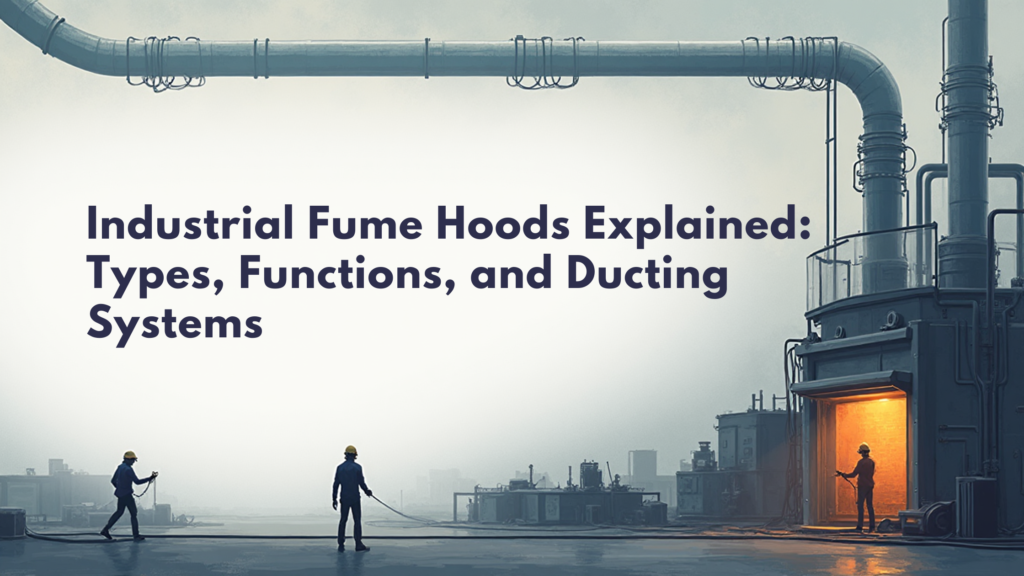
Understanding Industrial Fume Hoods
Fume hoods are used in both laboratory and industry to protect the environment by removing harmful vapours, dust and vapours from the air pollutants as they arise. Fume hoods provide a level of safety to a fume hood user by preventing chemical exposure by restricting access to chemicals while ensuring that these harmful materials remain confined within the fume hood.
Key Components of a Fume Hood
Sash – The movable glass panel that separates the individual using the fume hood from the materials contained within it. This sash can be raised or lowered to control the amount of air entering and leaving the fume hood.
Exhaust Blower – A fan that pulls contaminated air out of the fume hood and sends it down the ducting system for disposal.
Baffles – A series of panels inside the fume hood that help create a uniform airflow across the work surface.
Work Surface – The area within the fume hood where all experiments/reactions associated with chemicals occur.
Ducting System – The ductwork connecting the fume hood and the exhaust vent to ensure that contaminated air is safely removed from the work area, thereby protecting all workers in proximity to the fume hood.
Fume hoods perform the function of reducing the amount of hazardous chemicals to which workers are exposed and to minimize the amount of hazardous chemical inhalation experienced by workers. They also create a safe workspace.
The Role of Ducting Systems
Ducting systems consist of an integrated group of pipes or conduits through which the extracted air from fume hoods flows to the exhaust system located outside of the building, typically after being treated using a form of either filtering or neutralizing system. In the absence of proper ducting, it is possible for the fumes to be recirculated into the workplace or for them to leak into the workplace and create hazards to worker safety.
Types of Components Found in a Ducting System
- Main duct – Transfers air from numerous fume hoods and or extraction sites down to the common exhaust location.
- Branch ducts – Connect each fume hood to the main duct.
- Exhaust stack – Safely discharges treated (or otherwise filtered) air from the facility into the outside atmosphere.
- Filters/scrubbers – Capture and neutralize toxic chemicals prior to releasing them to the atmosphere, depending on the type of chemical being captured and neutralized.
Using the established principles of engineering, ducting systems can be designed to maintain a constant airflow through the equipment, provide minimum opportunity for contamination of the building, and minimise the chance for employees to be exposed to potentially hazardous chemicals.
Types of Industrial Fume Hoods
Fume hoods come in many shapes and sizes. Depending upon the specific processes and chemicals used, the different industries utilize different fume hood types:
Traditional Ducted Hoods (Exhausted) – These traditional hoods connect to a power-upgraded duct system, providing overly ventilated areas allowing for SVOC storage; they are appropriate for all volatile chemical processes.
Ductless or Recirculating Hoods – Ductless hoods filter air in the hood, allowing for clean filtered air into the room; generally used for safe, low-hazard materials. This is an appropriate use of recirculation hood technology.
Perchloric Acid Hoods – Perchloric acid hoods are specifically designed to effectively remove volatile gases through both mechanical and chemical filtration methods to safely handle highly reactive chemicals.
Radioisotope Hoods – These specialized hoods enable laboratories to handle radioisotopes without affecting other substances.
Each fume hood type is specifically designed to protect the operator from specific hazards related to chemical fume exposure.
Benefits of Industrial Fume Hoods and Ducting Systems
1. Safeguarding Worker Well-Being
Fume hoods provide a means for capturing and containing hazardous materials or chemicals, thus preventing workers from inhaling the vapors and protecting them against both chronic and acute health conditions, including:
- Respiratory Diseases
- Skin and Eye Irritations
- Long-Term Effects Of Exposure, Such As Organ Damage or Cancer.
Therefore, by providing means to eliminate the possibility of direct exposure to hazardous fumes, these types of systems help keep a healthier workforce and ensure fewer work-related injuries.
2. Preventing Worksite Contamination
Ducting Systems Prevent The Release Of Hazardous Fumes Into The General Work Area. This Prevents:
- Contamination Of Other Processes/Products
- Unwanted Reactions Between Chemicals
- Dumping Hazardous Waste Products Into The Facility.
3. Meeting Compliance With Safety
Industrial environments must adhere to OSHA, EPA, and other local environmental safety regulations. The installation of proper fume hoods and ducting systems will:
- Help ensure compliance with occupational safety standards
- Minimize the chance of penalties or lawsuits as a result of non-compliance
- Complement environmental protection objectives
4. Decrease the Risk of Fire/Explosion
Many chemicals found in the industrial environment are flammable and/or explosive. Fume hoods and ducting systems will do the following:
- Eliminate the presence of flammable vapours in the work environment
- Provide adequate ventilation to reduce the chance of ignition occurring
- Enhance the ability to provide proper ventilation when working in confined spaces
5. Improving Operational Efficiency
These systems will also enhance efficiency by:
- Allowing employees to handle chemicals safely without risk, thus increasing productivity
- Eliminating waste from processes while still maintaining a safe working environment
- Minimising contamination and exposure to hazardous materials results in fewer stoppages or interruptions caused by safety hazards.
Best Practices for Fume Hood and Ducting System Usage
How to correctly install fume hoods:
- Select a fume hood that is right for the size of your laboratory.
- Minimize any bends/restrictions in the ductwork.
- The exhaust stacks must be at a safe distance away from air intakes (e.g., HVAC equipment) and other areas where people are located.
Perform Regular Maintenance on chemical fume hoods:
- Monitor and take care of fans and ductwork regularly.
- Replace the chemical fume hood filter when it is required.
- Check the airflow velocity and containment of the chemical fume hood by using smoke tests or airflow measuring devices.
Train Employees on how to use chemical fume hoods:
- Teach them to use the sash correctly and the airflow settings.
- Stress the need to use chemicals safely.
- Make sure they are aware of keeping areas clear of obstructions.
Monitor and automate chemical fume hoods by:
- Install airflow monitoring devices and alarm systems to notify employees of airflow issues.
- Install automatic dampers to create a consistent airflow through the fume hood.
- Monitor/Control chemical fume hoods through a building management system to have an ongoing view of chemical fume hood performance.
Real-World Applications
Chemical Manufacturing Plants
Chemical manufacturers encounter the handling of flammable solvents as well as corrosive acids daily. Fume hoods, with proper installation and ducting, provide a safe means for processing these toxic vapours away from the processing area, protecting the safety of employees and complying with local regulatory requirements.
Pharmaceutical Laboratories
Pharmaceutical manufacturers require specialised ventilation systems in order to eliminate any possible contamination. Fume hoods are used in conjunction with pharmaceutical equipment to keep the products and the individuals working in those environments safe from cross-contamination.
Food Processing Facilities
Food makers handle volatile chemicals such as flavourings and food additives. Again, the fume hood ensures safe use of volatile chemicals without compromising food health and employee safety.
Emerging Trends in Fume Hood and Ducting Technology
- Eco-Friendly Fume Hoods – With VAV (Variable Air Volume) there is less energy used with no risk to safety.
- Intelligent Monitoring Systems – Sensors identify the temperature and airflow, pressure and contamination around you.
- Improved Filtration with HEPA, Activated Carbon and Chemical Scrubber Systems – Greatly Increase How Much Contaminants Wean Captured through Filtering processes.
- Modular Ducting Components – Modular ducting makes it easy to add on, change or adapt system layouts as needed to meet changing facility use.
All of these innovations improve safety, energy efficiency, and cost-effectiveness in fume hoods and ductwork.
Conclusion
Fume hoods and duct systems are an important part of protecting workplaces from hazards caused by chemicals and other potentially dangerous materials and substances. Using fume hoods and duct systems properly helps keep employees safe from exposure to hazardous chemicals and fumes, helps prevent workplace contamination, provides for improved compliance with state and federal safety regulations, and allows for improved operational efficiencies through proper use of chemical technologies.
The use of fume hoods and duct systems is only becoming more important due to the large number of industrial sectors that continue to advance and become more complex, and the amount of hazardous materials used by these companies. In addition, purchasing and deploying proper fume extraction and ducting systems is no longer a regulatory requirement, but instead represents a committed business decision that will deliver the highest level of protection from workplace hazards while improving operational efficiencies.
A focus on employee safety, through properly installed, operated, and maintained fume extraction and ventilation systems, enables companies to offer a work environment that is both safe and efficient while ensuring high levels of productivity and compliance with all applicable health and safety regulations.