What Types of Plastics Are Used in Fabrication and Their Advantages
Plastics can be fabricated or formed into different shapes depending on how they will be used. Their numerous applications have made plastic fabrication popular in many industries. Plastics have many advantages; they are inexpensive, easily fabricated, and provide a high level of durability. They have been used for a variety of purposes, including industrial applications, chemical storage, the construction of water treatment plants, and even the production of consumer products. Plastics are ideal for foaming into different forms and are used in many applications.
The performance of a fabricated product is driven by the type of plastic used. Each plastic has its own unique characteristics that make it appropriate for specific environments and uses. For example, some types of plastics will withstand high temperatures while others will melt below 150 degrees Fahrenheit.
In this blog, we will discuss some of the most popular manufactured plastics used in fabrication and their properties; we will also look at the advantages of using manufactured plastics for industrial and commercial applications.
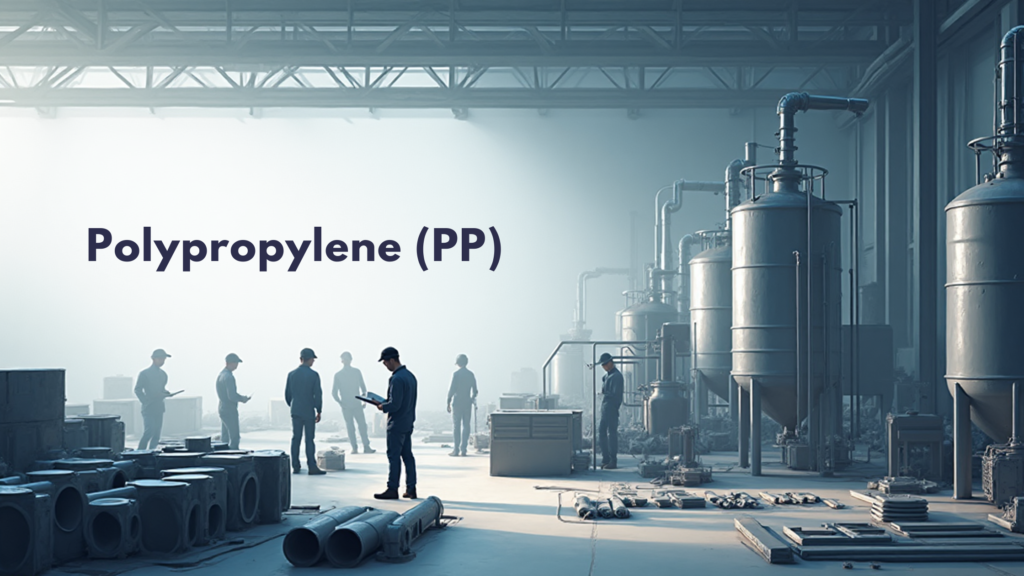
1. Polypropylene (PP)
Polypropylene (PP) is one of the most common materials used in plastic production, especially when used for manufacturing in an industrial environment or within various industries.
Some benefits of using PP include:
- Has excellent resistance to chemicals
- It is very strong but also very lightweight
- Has a high degree of thermal stability
- It is non-toxic and can be safely used with food products.
Polypropylene has a number of advantages. The chemical-resistant properties of polypropylene make it an excellent option when constructing tanks, scrubbers, pipes, and other pumping equipment that may come into contact with various types of acids, bases, and solvents. Due to the lightweight nature of polypropylene, it is much easier to handle and install than metals or many other common industrial materials.
Polypropylene can be shaped using many different methods, including welding, molding, and machining, which is another reason why it’s very popular when designing custom solutions for the industrial marketplace. Because polypropylene does not absorb moisture, it maintains its form and preserves its shape for the life of the product.
2. High-Density Polyethylene (HDPE)
HDPE (High-Density Polyethylene), like many plastics, is an effective material to use in the industrial (fabrication) sector. It is widely used due to its resilience and durability.
The following are some features of HDPE:
- High impact resistance
- Excellent resistance to chemicals and moisture
- High strength-to-weight ratio
- Available in UV-resistant grades
HDPE has been shown to perform exceptionally well in outdoor or industrial settings where a durable material is needed. Water tanks, chemical containers, piping systems, and liners are just a few of the common uses for HDPE, and due to its non-cracking, corrosion-resistant, and environmentally resistant properties, it can be tolerated in most extreme environments. HDPE is also recyclable, which contributes to its status as an environmentally responsible material.
3. Polyvinyl Chloride (PVC)
PVC (polyvinyl chloride) is one of the most prevalent plastic polymer resins produced worldwide; only PP and PE rank higher. While there are many different grades of PVC manufactured from the same raw material, only two categories exist: rigid and flexible.
Key Characteristics:
Long-Lasting, Durable: PVC has excellent resistance to environmental degradation (i.e., UV rays, chemical breakdown, corrosion), impacts, and cuts/abrasion. When used in the pipe industry, it is estimated that the life expectancy is greater than 50 years.
Fire Resistant: The high content of chlorine found naturally in PVC generates a product that has an excellent ability to resist and is easily extinguishable.
Electrical Insulation: As a result of being a non-conductive plastic, PVC makes a great choice for electrical insulation, particularly for wiring and cable sheathing.
Low Cost: PVC is produced relatively cheaply compared to metals/rubbers/woods used for similar applications.
Versatile: PVC can be produced in forms ranging from rigid to flexible. Its composition can also be modified by adding other materials.
4. Polyethylene (LDPE & LLDPE)
Polyethylene (Low Density and Linear Low Density)
Low-density polyethylene and Linear Density Polyethylene are used for flexibility and toughness.
.
Features of polyethylene
- Flexibility and low weight.
- Good impact resistance.
- Good chemical resistance.
- A smooth surface.
Examples of LDPE and LLDPE
LDPE and LLDPE are used for liners, covers, flexible containers, and protective sheets. LDPE and LLDPE can be fabricated and shaped into complex patterns. LDPE and LLDPE have the flexibility to absorb impacts without immediate failure, making them suitable for storage and lining applications. Also, these materials have good moisture resistance and chemical resistance.
5. Polytetrafluoroethylene (PTFE / Teflon)
The Engineering Plastic PVDF (Polyvinylidene Fluoride)
PVDF is one of the highest quality Engineering Plastics that can be used in extreme corrosive conditions.
Key characteristics of PVDF are:
- Incredible Resistance To Chemicals
- Exceptional Mechanical Strength
- Resistant To UV Damage And Weathering
- High Purity
Benefits of Using PVDF:
PVDF provides an excellent alternative for Chemical Processing, Semiconductor Manufacturing, and Water Treatment Applications because it can withstand both the harsh conditions caused by Chemical Exposure and High Temperature without losing its strength and integrity. PVDF has a very long life expectancy with very little maintenance; therefore, PVDF is an economical solution when used as a component in Critical Industrial Applications, even though it has a significantly higher upfront cost compared to traditional materials used.
6. Acrylonitrile Butadiene Styrene (ABS)
Acrylonitrile Butadiene Styrene (ABS) – ABS is a widely used plastic with excellent aesthetics and durability.
Properties of ABS:
- Very high-impact strength
- Extensive machining capabilities
- Very smooth surface finish
- Moderate Resistance to Chemicals
Benefits of ABS:
Due to its versatility, ABS is commonly used in consumer product manufacture, as well as in automotive, electronic, and construction applications. The ability to fabricate, machine, and thermoform makes this material an excellent choice for producing aesthetically pleasing, detailed components while still maintaining an adequate degree of functionality. Due to its combination of properties (strength, flexibility, and cost), it is often used for both functional and decorative purposes.
7. Fiber Reinforced Plastic (FRP)
An abbreviation for Fiber Reinforced Plastic (FRP)
A composite material composed of plastic reinforced with glass, FRPs have the following characteristics:
Key Characteristics:
FRPs have:
- A high strength-to-weight ratio
- Excellent Corrosion Resistance
- Excellent Resistance to Weather and UV Light
- Long Service Life
FRPs have many applications, including tanks, grating, benches, ducts, structural elements, etc. FRP can replace metals in corrosive conditions (panels, etc). As FRP cannot rust, rot, or corrode, it makes FRP a great option for chemical and marine environments and for use in major infrastructure projects. FRPs are also lightweight, which significantly reduces the cost of transacting and installing products established as FRP.
8. Corrosion-Free and Low Maintenance
Plastics, unlike any of the metals, will not rust, oxidise, or corrode after being in contact with water, moisture, and chemicals.
The advantages of using plastics in very harsh conditions include chemical plants, wastewater treatment plants, and coastal areas.
By design, plastics eliminate the requirement of coatings, painting, and other forms of surface treatments to prevent corrosion.
In addition, plastics have very little need to be regularly maintained, which means that they can save money due to the lower cost of repairs or replacement.
The structural integrity and strength remain constant for long durations of time without the requirement for any maintenance.
Plastics are not prone to chemical attack, scaling, or degradation due to the environment.
Therefore, plastics can be used in locations where maintenance access is difficult or limited.
9. Weather and UV Resistance
When designing plastics for manufacturing, it is important to consider the effects of harsh weather and long-term exposure to ultraviolet (UV) radiation. Each type of plastic will provide protection from damage due to sunlight, including becoming brittle, losing color, and developing surface damage; therefore, UV-stabilised plastics such as polypropylene (PP), high-density polyethylene (HDPE), and Fibre Reinforced Plastics (FRP) will not crack, fade, or suffer from surface damage due to UV light. Additionally, these materials do not hold water, so they do not swell, warp, or lose strength during times of heavy rain or high humidity. By understanding these characteristics of fabricated plastic materials, you can use them for many different outdoor uses, including tanks, ducts, gratings, benches, and enclosures. Because these plastics can withstand extremely high and low temperatures, they are much more likely to be durable for many years to come with minimal maintenance when placed in open, exposed conditions.
10. Cost-Effectiveness Over Metal Alternatives
Plastics usually have lower manufacturing costs than metals because plastics use less expensive raw materials than metals, and the actual manufacturing processes are less expensive to manufacture than those of metals.
Because of the lower weight associated with transporting, handling, and installing plastics, the total cost of doing business with plastics is typically an order of magnitude lower than with metals.
Plastics do not require any coatings to protect against rust, paint, or any treatment necessary to protect against corrosion.
Thus, over the lifetime of the product, maintenance and repair costs will be substantially lower.
Plastics have an extended service life when used in buried pipelines in any type of corrosive or outdoor environment compared to metals.
The quick turnaround times for product fabrication, installation, and reduced labor costs associated with both of these parameters, will also lower the overall total project cost.
The energy-efficient manufacturing processes will ultimately reduce the embodied total production costs of plastics.
Conclusion
Choosing the right solution for industrial and commercial applications is very important when looking to use plastic in fabrication—understanding the advantages of plastics and their types is an important step in this process. Plastic materials such as polypropylene and HDPE are versatile; plastics such as PTFE and PVDF represent high-performance materials with unique properties tailored for specific applications.
As technology advances and innovative plastic materials continue to be developed, plastic fabrication has taken over for industrial and commercial applications, replacing more traditional metals and woods as a result of superior corrosion resistance, lightweight, flexibility, and long-term savings in cost of ownership. The increasing role of plastics will enhance all functional areas of building durable, efficient, and sustainable products.
The appropriate choice of a fabricated plastic means improved product performance, lower maintenance, and greater long-term reliability—all making plastic fabrication a wise economic decision for modern manufacturing.